
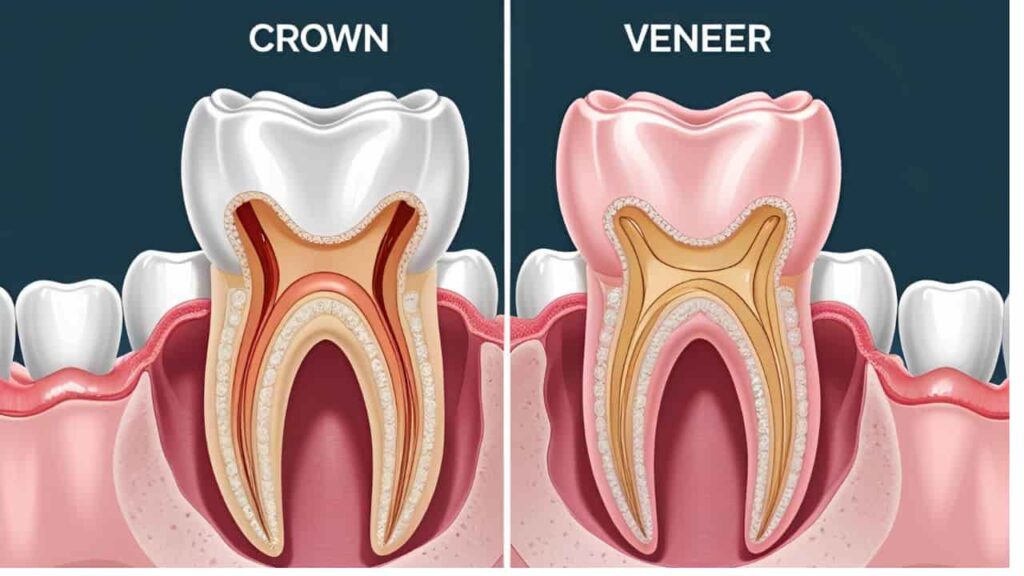
Introduction
In the field of cosmetic dentistry, the discourse around veneers and crowns often feels confusing—and honestly, I’ve seen many patients struggle to understand the differences despite how similar these treatments may appear on the surface. From my experience, the same concern repeats: which treatment is right for me? While both options offer amazing benefits, their applications are quite different. Crowns typically cover the entire tooth, while veneers only mask the front, but both belong to the realm of smile-enhancing advances.
As emerging techniques continue to reshape the uses of these procedures, the decision comes down to more than looks—it’s about function, longevity, and even the materials involved. That’s why this article aims to clear any misunderstandings, guiding you through a fair comparison that considers not just aesthetics but also the costs, key features, and core similarities that define the two. In this ever-evolving space, understanding the #1 working line between these options is the first step to a confident, informed smile.
“Veneers vs. Crowns: Exploring Similarities and Differences”
In my years working in cosmetic dentistry, I’ve seen how both veneers and crowns are often chosen to improve the appearance of a damaged or flawed tooth—especially when covering visible mishaps like chips, stains, or cracks. While they serve similar purposes and fall under general applications in cosmetic treatments, their structures and the way they work are quite different. Veneers are thin shells placed on the front of teeth, while crowns cover the entire tooth, making them suitable for cases that require more strength or repair. Despite some shared functions and similarities, they each shine in specific applications, and knowing where each option fits best can make all the difference for patients seeking both form and function.
Veneers
From what I’ve seen in practice, veneers are thin, shell like structures made of porcelain or composite resin, designed exclusively to transform the front teeth for purely aesthetic reasons. Whether it’s pigmentation, chipping, or slight misalignment, they work by eclipsing such mishaps once your dentist carefully places the shell over the tooth. This procedure doesn’t replace missing teeth or fix decaying ones, since veneers need healthy teeth underneath for support they’re actually cemented in place.
If you’re considering getting all 12 front teeth done, this full set is commonly known by the name “Hollywood Smile.” You can get just one veneer or multiple, depending on your needs. The function of veneers is entirely cosmetic, and in the veneers vs crowns argument, they are clearly more aesthetic. For deeper insights, the dental guide we’ve prepared outlines the types, pros, and cons, along with helpful information to make an informed choice.
Crowns
Unlike veneers, crowns are known for their strength and versatile nature, making them suitable for all kinds of teeth, whether posterior or anterior. One important difference to note is how crowns can work just as effectively on front teeth as they do on back ones, even though many patients often associate them with molars. From a material standpoint, crowns offer a large array of options, including zirconia, porcelain, composite, resin, and even metals each chosen based on the needs of the treatment. In my experience, this range of materials not only expands function but also personalizes every comparison between veneers vs crowns, especially when it comes to durability and tooth preservation.
Veneers or Crowns? Making the Right Choice for Your Smile.
From my professional experience, the decision between two optionsveneers or crowns often depends on your personal concerns and what your dentist recommends. If your goal is purely aesthetics, and the position of the affected tooth is toward the front, a more cosmetic treatment type like veneers might be the most fitting. However, for functional issues or damage, crowns are often the better treatment. This short guide serves as a general starting point to help you choose, but remember, depending on your situation, your dentist will tailor their advice to ensure the best possible outcome.
Back teeth
When it comes to posterior or back teeth, especially after a root canal treatment or fixing a cavity, the best way to restore the appearance and function of the tooth is often with crowns. From my clinical experience, the choice of material plays a big role zirconia is a top option because it’s incredibly durable and can handle the pressure and force from daily chewing. However, if the tooth is entirely missing, even down to the root, you’ll likely need dental implants or bridges instead, as a crown needs a remaining piece of the tooth to encase and anchor properly. Think of crowns like a protective case they work best when there’s still something left to support. And yes, patients should also be aware of the possible dangers and risks involved, so it’s important to know your options clearly before making a decision.